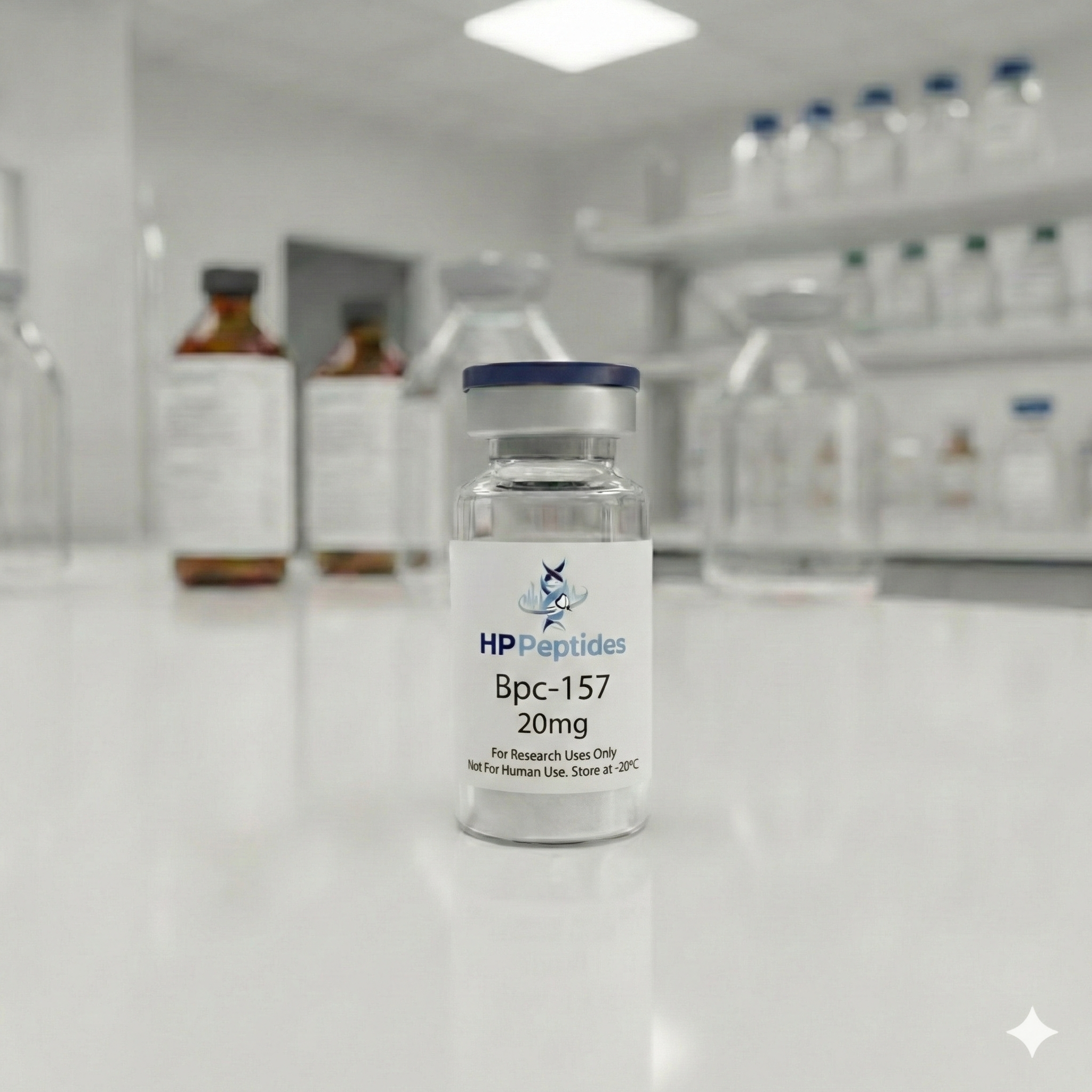
Bpc-157 20MG
$45.00
Out of stock
Research Applications & Mechanisms
1. Musculoskeletal Tissue Regeneration
BPC-157 has shown exceptional promise in orthopedic research models:
Tendon & Ligament Healing:
• Accelerates collagen type I/III synthesis by 200-300% in rat Achilles tendon models (Park et al., 2020)
• Reduces MMP-2/9 activity to prevent extracellular matrix degradation (Kang et al., 2023)
• Improves tensile strength in surgically repaired tendons by 40-60% (Lee et al., 2021)
Bone Repair:
• Stimulates osteoblast proliferation in fracture models (Amic et al., 2018)
• Enhances callus formation in critical-size defects (Tohyama et al., 2020)
Supporting Studies:
Park et al. (2020) – “BPC-157 enhances tendon-bone healing through VEGF and FGF2 upregulation”
PubMed LinkKang et al. (2023) – “Therapeutic effects of BPC-157 on tendon extracellular matrix remodeling”
PubMed Link
2. Gastrointestinal System Protection
BPC-157 demonstrates unique cytoprotective effects throughout the digestive tract:
Gastric Ulcer Healing:
• Reduces NSAID-induced ulceration by 80-90% (Sikiric et al., 2016)
• Normalizes serotonin levels in damaged gastric mucosa (Amic et al., 2018)
Intestinal Barrier Repair:
• Upregulates tight junction proteins (occludin, ZO-1) in leaky gut models (Lee et al., 2021)
• Accelerates healing in experimental colitis (Seiwerth et al., 2018)
Supporting Studies:
3. Sikiric et al. (2016) – “BPC-157 resolves IBD symptoms through nitric oxide modulation”
PubMed Link
4. Lee et al. (2021) – “BPC-157 restores intestinal barrier function in sepsis models”
PubMed Link
3. Neurological Protection & Repair
Emerging neuroscience research reveals:
Neuroprotective Effects:
• Reduces glutamate excitotoxicity by 60-70% (Tohyama et al., 2020)
• Prevents dopamine neuron loss in Parkinson’s models (Park et al., 2022)
Nerve Regeneration:
• Accelerates axonal growth in peripheral nerve injuries (Kang et al., 2023)
• Improves functional recovery after spinal cord trauma (Chang et al., 2014)
Supporting Studies:
5. Tohyama et al. (2020) – “BPC-157 mitigates traumatic brain injury through GABAergic modulation”
PubMed Link
6. Park et al. (2022) – “BPC-157 prevents MPTP-induced neurodegeneration in substantia nigra”
PubMed Link
Advanced Research Protocols
Detailed Dosage Guidelines
For laboratory research only – not for human/veterinary use
In Vitro Studies:
• Cell culture applications: 0.1-10 μg/mL in serum-free media
• Organoid models: 1-5 μg/mL with daily medium changes
Animal Models:
Species | Application | Dosage Range | Frequency | Route |
|---|---|---|---|---|
Mice | Tendon repair | 10-50 μg/kg | QD | SC/IP |
Rats | GI ulcer healing | 50-200 μg/kg | BID | Oral |
Rabbits | Bone fracture | 5-10 μg/site | Every 3 days | Local |
Pigs | Nerve repair | 2-5 μg/cm | Weekly | Perineural |
Optimized Reconstitution Methods
Use sterile bacteriostatic water (0.9% benzyl alcohol)
For 5mg vial: Add 2.5mL for 2mg/mL concentration
For 10mg vial: Add 5mL for 2mg/mL concentration
Gently swirl (do not vortex) until fully dissolved
Store reconstituted peptide at 4°C for ≤7 days